Everything That Cannot Be Carried
On belonging, land, and what survives when a village is gone. A long-form essay on South Lebanon, displacement, and the persistence of identity.
On belonging, rootedness, and what survives when a village is gone
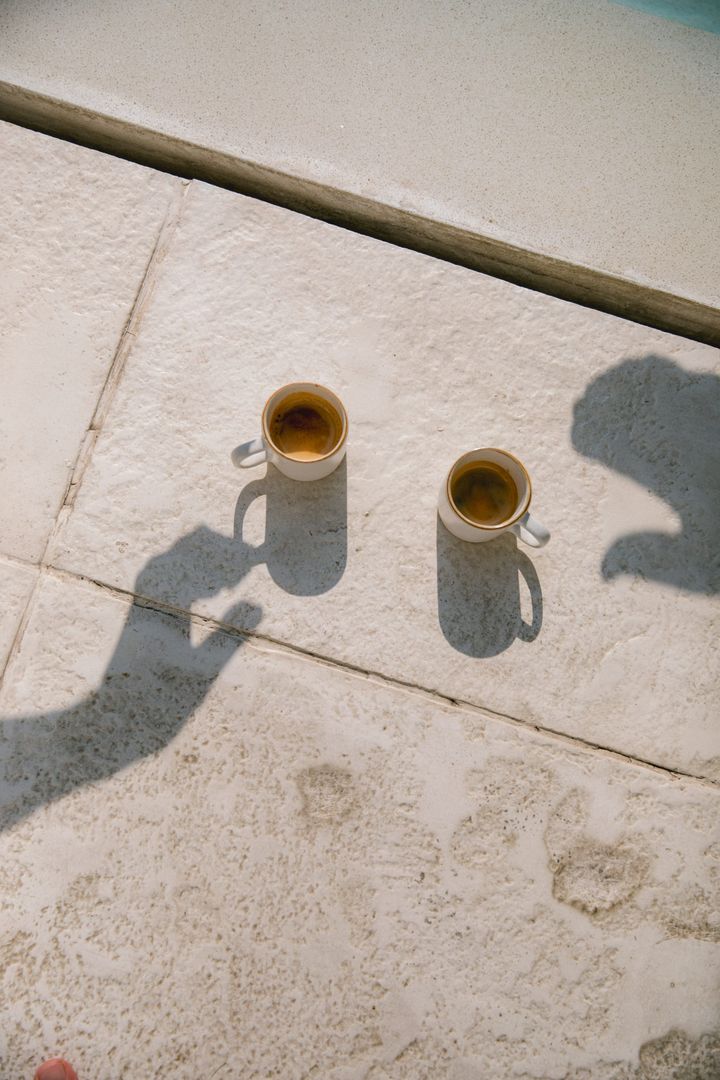
It is the first hours of dawn on the second of March, and the village has not yet decided to wake. The light is the colour of ash. She is already in the kitchen — she has always been the first one up — filling the small copper pot with water, measuring the coffee by instinct into her palm, adding the cardamom the way her mother added it, which is to say without measuring. The jar of olive oil sits on its shelf where it has always sat, catching the first grey light through the window. She does not think about the jar. She does not think about the silence, or the cold stone floor under her bare feet, or the specific smell of the house in early morning — woodsmoke still faint in the walls, citrus from the tree in the courtyard, the particular breath of a house that has been lived in for generations. These things are simply the air she moves through. She has moved through them every morning of her adult life.
By the time her coffee has cooled enough to drink, the first evacuation warnings have been issued. By the time she has washed the cup, the sound she thought was distant thunder has stopped being that.
She does not lock the door when she leaves. There is no time, or perhaps — and she has thought about this since, turning it over in the way you turn over something that refuses to resolve — perhaps it felt wrong to lock it, as though locking it would acknowledge that she was actually leaving. She takes the children's documents, the medications, the rosary from the nail beside the front door. She does not take the ceramic jar of olive oil from its shelf. She will be back. The jar will wait. The house will wait. Everything will wait.
There is a need so fundamental that most people spend their entire lives not knowing they have it. Not hunger, not shelter — something quieter and harder to name. The need to belong to a specific piece of earth. To be held by it, shaped by it, recognised by it. To walk into a room and know without thinking where to sit, to smell something and know without searching what it means, to hear a name and carry its full weight of association — the family behind it, the field behind the family, the particular quality of light on that field at a particular time of year. This need is invisible until it is taken. Like most essential things, it reveals itself only in the moment of its destruction.
Since March 2, over a million people have left southern Lebanon, the Bekaa, the southern suburbs of Beirut. Evacuation warnings issued for more than fifty villages. Airstrikes reaching places that previous wars had left untouched — Christian and Druze towns, coastal cities, mountain roads. Families packed cars in forty minutes, in twenty minutes, in the time it takes a village to understand what the sound above it means. They left behind what they expected to retrieve. Some have returned to rubble. Some do not yet know what they will return to, because they have not been permitted to return.
This is not a piece about the politics of that displacement. The politics are documented elsewhere, argued elsewhere, contested elsewhere. This is a piece about the ceramic jar. About the door left unlocked at dawn. About what it costs a person to lose the place that made them.
The village in South Lebanon is not merely a location where people live. It is a specific argument about identity, made in stone and soil and seasonal labor over hundreds of years. Families carry their villages in their surnames. The tobacco harvest is not agriculture — it is the annual moment at which a community becomes itself most fully, every neighbor in the same field, the same bundling motion that grandmothers and grandchildren perform side by side, the knowledge passing between their hands without language. The feast of the local saint belongs to a specific courtyard, a specific church, eight women who hold the specific recipe for the sweet made only on that day, in that place and no other.
What does this kind of life feel like from the inside? It feels like Tuesday. The woman measuring cardamom into her palm at dawn is not thinking: I am enacting a centuries-old ritual that constitutes my cultural identity. She is thinking about the weather, her daughter's school run, the tobacco seedlings that need attention. The belonging is ambient. It is the temperature of the air she breathes. You do not notice the root until the ground is gone — and then, in the specific quality of that absence, you understand what the root was doing. What it was holding. How much weight it carried, silently, for a lifetime.
You only learn the word thirst when you have gone without water.
A family from Bint Jbeil packs a car in forty minutes. The father takes the documents. The mother takes the medications, the children's school records, the rosary. She reaches for the embroidered tablecloth from the drawer — the one made by her mother-in-law for the wedding, used only on feast days, folded in the same drawer for thirty years — and then she puts it back. She will come back for it. The tablecloth will wait. The height measurements pencilled on the kitchen wall — her children at five, at seven, at nine, each dated in her mother-in-law's handwriting — those will wait too. The photograph on the wall of the village before the war before the last war, which she has looked at every morning for twenty years: that will wait.
She takes the rosary. They drive north.
Some of what she left is now rubble. Some of it is dust. The height measurements are gone. The handwriting is gone. The tablecloth — she does not know about the tablecloth. This uncertainty, which appears to be a small thing, turns out not to be.
Mahmoud Darwish, the Palestinian poet who spent his life writing from inside exactly this kind of loss, arrived at a single word after dismantling a lifetime of language to reach it. Home. Not homeland, not nation, not people — just that one syllable, reduced to its barest form. It takes this kind of loss to understand what the word was always carrying.
What survives displacement is smaller than what preceded it. But it is not nothing.
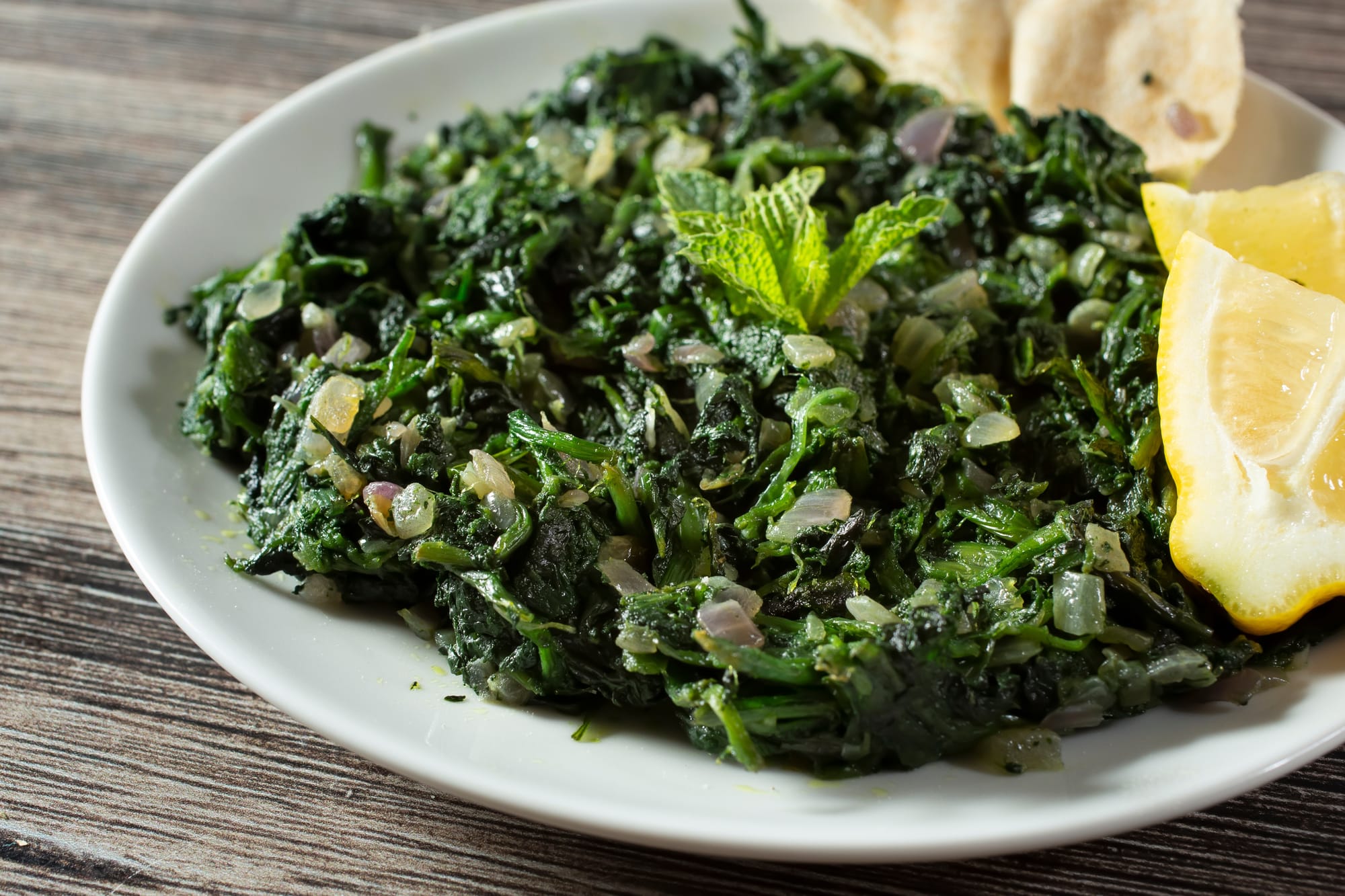
The recipe for the dish that requires the wild herb harvested from a specific hillside — hindbe, bitter and precise, found growing where the terraces meet the scrub above the village — cannot be reproduced perfectly in an apartment in Beirut. The herb available at the market is similar. The woman who makes the dish knows the difference immediately, in her hands, before she has tasted anything. She makes it anyway, with the same sequence of movements, the same quiet attention, the same care over the pan. The dish arrives at the table tasting almost right. Almost is the territory of this kind of life now. It is not nothing.
The feast day arrives three weeks into the displacement. She sets the embroidered tablecloth — the second one, the one she did manage to bring — in a borrowed apartment in Jounieh, or a relative's living room in Ashrafieh, or a shelter in a school that has been cleared of its desks. She makes the specific sweet. She says the specific prayer. Her children and grandchildren come from wherever they have each landed in these weeks. The apartment is too small for the number of people. Nobody says this. The ritual is correct in every detail except the courtyard, the church bells that would have marked the hour in the village, and the eight other women who also knew the recipe and are now scattered across eight other borrowed rooms in eight other parts of the country. The feast migrates with the people. It fits differently. It is the same feast.
The belonging that was once absorbed by proximity — by living in the place, among the people, inside the calendar of seasonal labour and harvest and feast — must now be maintained by hand. Performed deliberately, against the pressure of emergency and exhaustion, transmitted through language rather than through air. The grandmother describes the village to her grandchildren in the car, on the road north, her voice level. The walk from the house to the spring. The quality of the water from that spring and no other. The fig tree beside the door. The colour of light on the western wall in September, which is the colour of no other light she has seen anywhere. Her grandchildren listen. They will remember. This is now their work.
In schools and municipal halls converted into shelters across Beirut and Mount Lebanon, the displaced are sleeping in rows. Families who left in the night with what they could carry. Children in school clothes that are no longer for school. The reports say that over 100,000 people are in collective shelters as of the first week, and the number is still rising. These are the ones whose names are being counted. The belonging they carry is not counted anywhere.
But look at what they have brought with them into these rooms. Not furniture, not appliances, not the objects that fill a house and give it volume. The rosary. The specific spice mixture that is nobody else's recipe. The phone contains a photograph of the wall showing the height marks. The name of the village, carried in the surname, carried in the speech, carried in the specific way a particular family from a particular hillside in South Lebanon refers to the people around them, the words they use for greeting and for grief, the particular Arabic that tells any other Lebanese exactly where you are from, more precisely than any map.
A village that exists only in the minds of those who knew it is not the same as a village. But it is a form of insistence. And insistence, repeated over generations, carried across wars, refuses to be reduced to rubble.
She is in Beirut now, in her sister-in-law's apartment, sleeping in a room with three other women. She does not know yet what remains of her house. The reports from the village are uncertain and contradictory, and she has learned not to read them after dark. In the mornings, she gets up before the others, as she has always done, and makes coffee — the same copper pot, which she did take, which she carried in a cloth bag on her lap in the car — adding the cardamom by instinct into her palm. The jar of olive oil is not here. There is oil from a shop, which is oil, but it is not that.
She thinks about the jar. She thinks about where it sat — third shelf, left side, against the wall — and how the morning light used to find it there, and how she never thought about the morning light finding it, because she did not need to think about it. It was simply there. It was simply Tuesday.
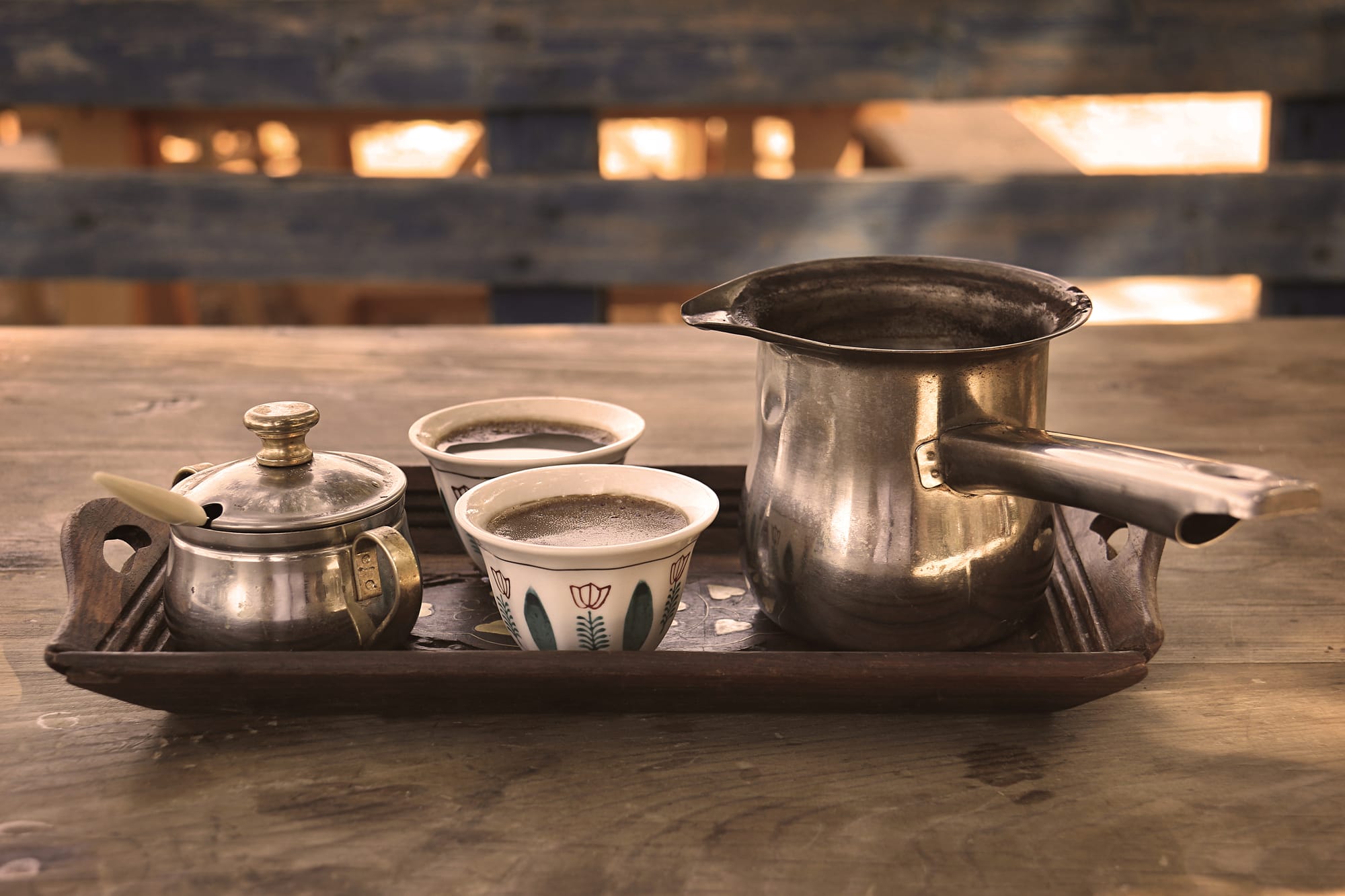
The copper pot comes to the boil. She removes it from the flame a second before it would spill, because she has always known when to remove it, because her mother knew when to remove it, because this is what belonging looks like when it has been compressed to its essential form: the knowledge of exactly when to stop, and the hand that still knows how.
The village is forty kilometres south, and she cannot go there yet. She pours the coffee. The cardamom rises. She is here.