What a City Keeps
Cities Under Pressure — No. 1
On a Tuesday morning in Het Zuid, the cafés fill early. The neighbourhood sits in Antwerp's southern quarter like a held breath — wide streets, tall windows, the particular silence of a place that knows what it is and sees no reason to announce it. The menus are handwritten. The conversations are low. Somewhere nearby, a city is in the middle of an argument it has not yet chosen to have in public.
Antwerp has always been like this. A city that prefers the long game: money quietly changing hands, culture polished until it gleams without ever quite shouting look at me, opinions formed early and held privately. For centuries, the diamond trade taught this city how to assess extraordinary things with a cold eye and a number. That logic, it turns out, does not stay in the district.
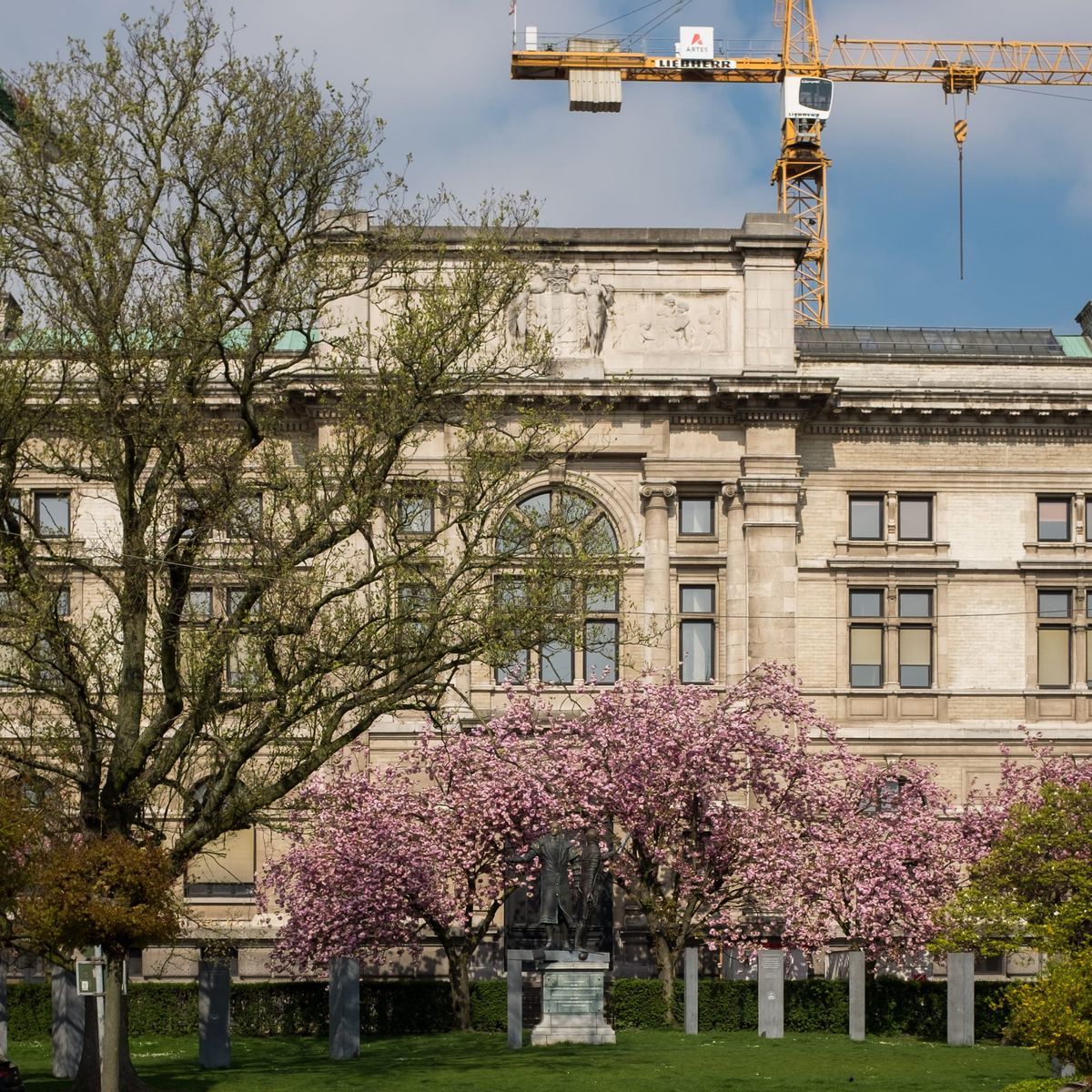
A short walk from Het Zuid, across Leopold de Waelplaats, two institutions face each other across a question the city has not resolved. On one side, the Royal Museum of Fine Arts Antwerp — KMSKA — newly confident, freshly burnished after years of renovation. On the other, the Museum of Contemporary Art Antwerp — M HKA — facing a government decision that reads like an administrative memo and lands like something else entirely.
The square between them is quiet. That, too, feels like something.
KMSKA has returned not merely reopened but repositioned. The Gormley bodies are here. Magritte alongside Ensor. Evenings that stretch past the hour museums are supposed to close, children invited not to behave but to touch and question. The programming reads like a diplomatic passport: accessible, international, reassuring to those who control its budget. This is museum-as-soft-power. Culture made legible for the people writing the cheques.
A few hundred metres away, the mood shifts entirely.
The Flemish government has moved to strip M HKA of its museum status, cancel its long-promised €130 million new building, and relocate its 8,000-work collection to S.M.A.K. in Ghent. In its place: a reimagined "arts centre," without a permanent collection, without the curatorial autonomy it once held.
Rational restructuring, some say. Quiet amputation, say others.
The response has been anything but administrative. Legal challenges filed. Open letters circulated in language unusually sharp for this corner of Europe: opaque, unlawful, dangerous precedent. Among those who raised their voices: Luc Tuymans — Antwerp's own chronicler of institutional unease — and Anish Kapoor, lending international weight to a local alarm. What is being contested here is not a building or a collection. It is the question of who decides what contemporary culture is worth keeping, and what happens when that decision is made by those who prefer their art without friction.
Set against each other, KMSKA's confidence and M HKA's precarity form a cultural split-screen. One city. Two institutions. Two entirely different ideas about what culture is for.
This is not hypocrisy — Antwerp has never been that simple. It is a city built on trade-offs: commerce and culture, discretion and ambition, preservation and profit. What we are watching is not contradiction but collision. The balances that held quietly for decades are no longer holding.
And what plays out here is not only Antwerp's concern. Across Europe, cities are being asked to justify culture in terms that policy-makers can measure — footfall, revenue, reach. Museums are expected to attract and entertain and brand. Less valued are those that provoke without fanfare, resist without visibility, or refuse easy translation into a press release.
Budgets are arguments. Buildings are positions. The decision to cancel M HKA's future while KMSKA flourishes is not a neutral administrative outcome. It is a statement about what kind of culture a city believes it deserves — and what kind it has quietly decided it can afford to let go.
Back in Het Zuid, the cafés are still full. The menus are still handwritten. The conversations are still low, unhurried, conducted at the particular register of people who trust that no one is paying close enough attention to notice.
Whether that trust is still earned is the question now.