
Going Nowhere in Particular
The tourist who spends two days in a city has arrived. The person who stays for ten days has possibly begun to be there. On the epistemology of slow travel — and what a place only shows you after it stops performing.
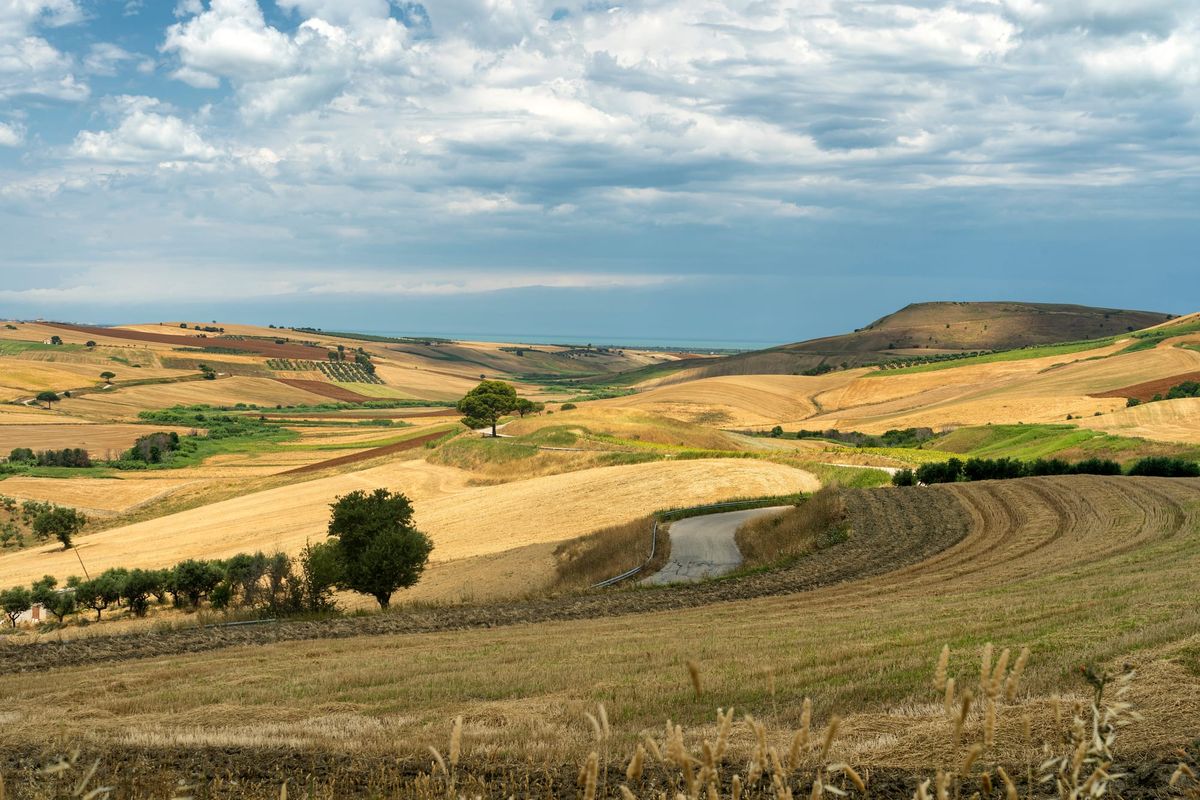
The problem begins on arrival. You step out of the car, or the train, or whatever vehicle has carried you from your ordinary life into this temporarily extraordinary one, and the place immediately begins performing. The light is doing something. The streets have a quality. The smell is specific in the way that smells in foreign places always are — layered and slightly wrong in a way that resolves, over the next hour, into something you will spend the rest of the trip trying to describe. You are performing too, of course. You are noticing things. You are forming impressions. You are, without meaning to, constructing the place from the image you already had of it, which arrived via a magazine, a recommendation, someone else's Instagram, a half-remembered film. The place and the image overlap almost perfectly, which feels like recognition but is actually something closer to confirmation. You have not seen the place yet. You have seen your expectation of it.
This is not a failure of perception. It is a structural problem with short stays.
Two days in a city is enough time to photograph it. It is enough time to eat somewhere that has been written about, to walk a district you were told to walk, to accumulate the category of experience that produces, upon return, a sentence beginning "When I was in—". It is not enough time to have any reliable idea of what the place is actually like. What you have is a sample, curated by your own prior knowledge and by the invisible infrastructure of tourism, which exists specifically to produce the feeling of comprehension in people who are passing through. The city has met you at the door. It has shown you the rooms guests are shown. It has not taken you upstairs.
The question of how long it takes to stop being a tourist is, admittedly, one without a clean answer. But the process is legible. It begins — if it begins — somewhere around the third or fourth day, when the place stops cooperating. When the market you went back to visit looks exactly the same as it did the first time, and you realise you have nothing new to do with it. When a street you have now walked three times starts to feel like a street rather than a sight. When you notice, without intending to, what the bakery near the house sounds like at seven in the morning, and what it sounds like at noon, and how those two versions of the same corner are barely the same place. This is not atmosphere. This is information. It requires duration to produce.
There is a farmhouse kitchen that becomes legible on the third evening, not the first. On the first evening it is atmospheric: the light is warm, the table is large, there is something soaking in a bowl that you photograph before you understand what it is. On the third evening it is a kitchen. You know where the good knife is. You know that the overhead light is useless after dusk and that the lamp in the corner is the thing you actually want. You know that the view from the window looks different at six in the evening than at six in the morning — not better or worse, but different in the way that only a sustained relationship with a particular window can make apparent. This is not romance. This is geography, acquired through repetition rather than arrival.
The landscape that produces this kind of knowledge is rarely the dramatic one. A view with an obvious iconic form — a famous peak, a coastline that resolves into a single image — gives itself away immediately. You have seen it. You can tick it. The landscape that rewards staying is the one that appears, at first, to have relatively little to offer: undramatic, internally consistent, resistant to the kind of photography that makes a place legible from a distance. Rolling agricultural land, say. Stone farmhouses with no particular feature that singles them out. An absence of monuments. This kind of landscape contains enormous amounts of information that cannot be extracted in forty-eight hours and is not available to someone who is covering ground. It becomes available to someone who is not going anywhere.
The logic of contemporary travel runs directly against this. The itinerary, as currently constructed by most people who travel, is a system for maximising the number of places visited, weighted by the prior reputation of each place. More is more, because more is, by the arithmetic of itinerary, more. The two-week trip that covers four countries is considered, in aggregate, a richer experience than the two-week trip that covers one. This seems obviously wrong in the way that many things seem obviously wrong once you state them plainly, and yet the itinerary is still built this way, because the alternative requires accepting something uncomfortable: that you will return from a trip having seen less, having covered less ground, having a shorter list of restaurants to recommend. You will have, instead, a more accurate picture of one specific place at one specific time. This is a significantly harder thing to discuss at a dinner party.
The argument for slow travel is not that it is more restful. It is not particularly restful. It is that it is more epistemologically honest about what travel can and cannot produce. A place visited for two days produces an impression. A place stayed in for ten days produces something closer to understanding — partial, provisional, situated in the specific conditions of that particular stay, but understanding nonetheless. The difference is not atmospheric. It is methodological.
None of this is an argument against short trips, which are sometimes the only trips available and which produce their own kind of experience. It is an argument for being precise about what that experience is. To arrive somewhere for forty-eight hours and leave is to have confirmed your prior image of the place against contact with it. This is not nothing. But it is not knowledge of the place. It is knowledge of your own expectations, tested against a surface.
The traveller who adjusts the itinerary accordingly — who decides that one place, understood, is worth more than three places grazed — is not making an aesthetic choice about the kind of person they want to be. They are making an epistemological choice about the kind of information they want to return with. The place, for its part, will not notice the difference. It will perform for you on the first day and stop performing by the fourth. What it shows you after that is not for tourists. It is just what happens there, on an unremarkable Tuesday, when no one is visiting.
That is, depending on your priorities, either the whole point or completely beside the point.