The Land Decides the Menu
He doesn't decide what to cook. He arrives at the market and waits to be told.
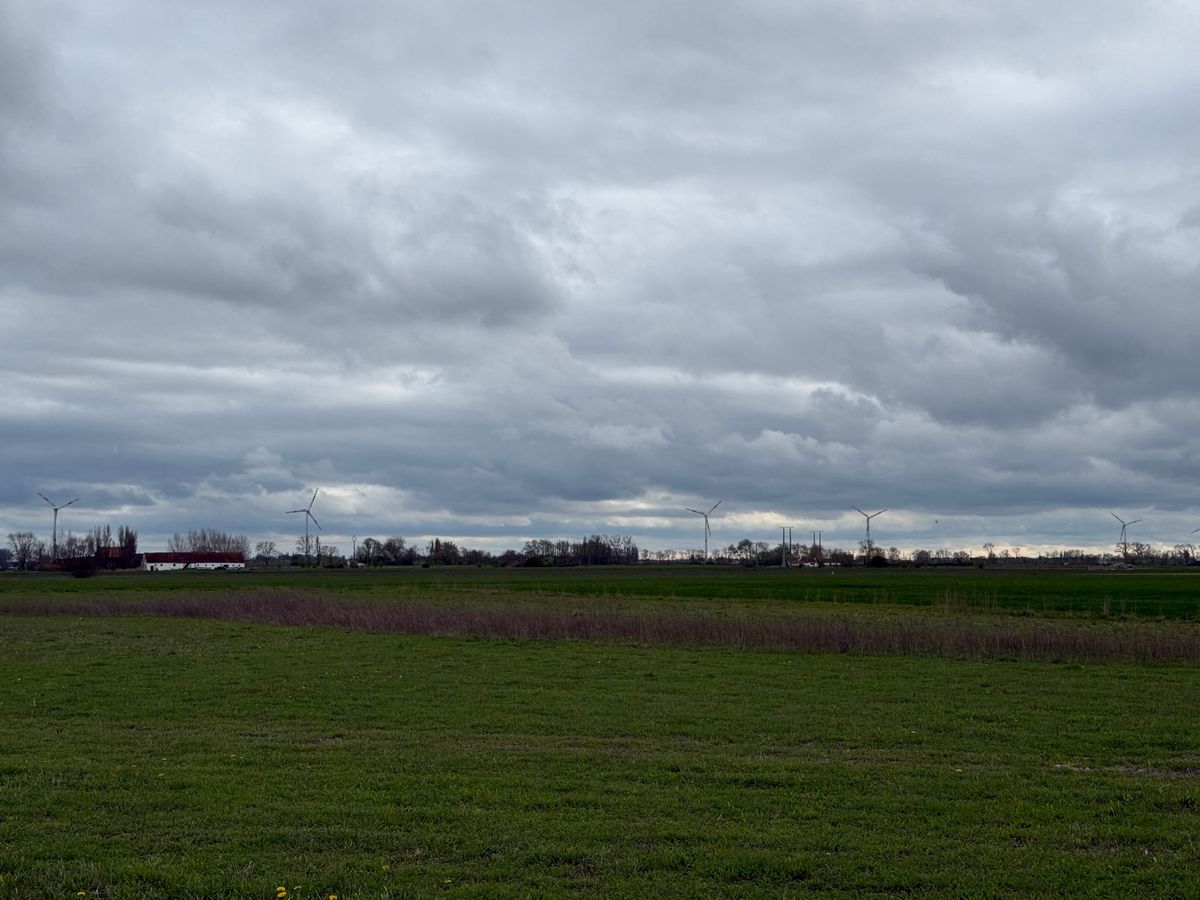
The polders outside Ostend are not beautiful in any reassuring sense. They are flat, damp, grey in the way that grey is a full palette — tin sky, pale clay, the particular green of wet grass that has been wet for several months and expects to remain so. The North Sea announces itself before it appears: in the air, in the smell, in the wind that moves across open land with no interest in being slowed down. It is not a landscape that flatters. It is a landscape that states.
Restaurant Willem Hiele sits inside all of this without softening any of it. The building is a brutalist villa from 1971, designed by the Belgian sculptor and architect Jacques Moeschal from the same polder clay that surrounds it. Raw concrete. Clean lines. Windows that frame the fields like the fields are the interior. Hiele slept in every room during the renovation — not for any romantic reason, but to understand the light, to feel what the building asked of him. What it asked was restraint.
He was born here. His grandfather, Jerome, fished these waters. Eight generations of his family worked the North Sea before he did. When Hiele says he cooks only what he can see, he is not making a philosophical declaration. He is describing a constraint he chose to honour.
The market that sets the menu is the Vistrap in Ostend: a small quayside operation, legally restricted to fishermen who own their boats and leave the port at four in the morning. There are not many of them left. The stalls are few. What is in the polystyrene boxes is still moving. Hiele arrives with no fixed menu, buys what is available, and does not know until that exchange what the evening will produce. A mackerel he hadn't planned for becomes the opening. The turbot, if it arrives, becomes the centrepiece. If neither is caught in quantity, something else does the work. This is not improvisation as a style. It is accountability as a structure.
The turbot, when it comes, is cooked in a way that is now documented enough to be included in a textbook. Three types of wood. A fire built to give heat at different registers. The fish wrapped in burlap is soaked in seawater and placed above the flame so that it grills, smokes, and steams simultaneously — three cooking processes in one action, each working on the flesh at a different depth. The result is served without embellishment: pure fish, a sauce made from its own bones and head with a measure of vin jaune, the logic of the thing closing on itself. Hiele describes a piece of mackerel from the smoker, with nothing added, and notes that those who eat it are always surprised by its simplicity. The surprise is the point. The expectation of fine dining — something added, something constructed, something that demonstrates — is quietly refused.
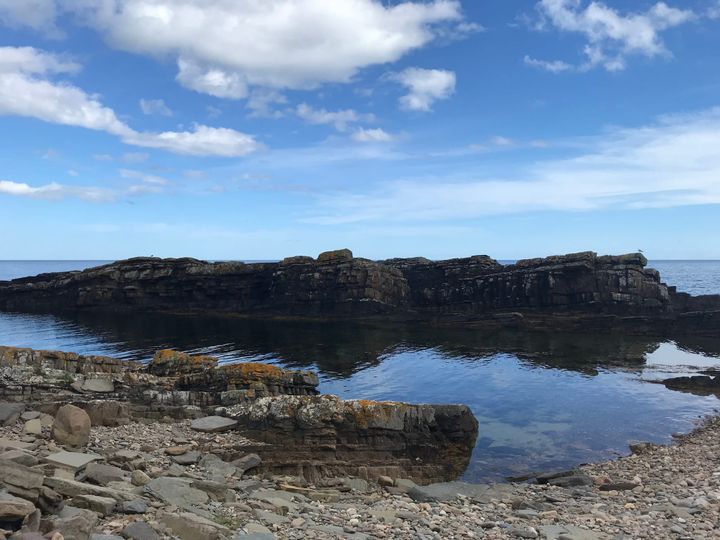
The Seafire method is named for what it does to a fish. But fire is the second element. The first is the sea itself, and its willingness to give or withhold.
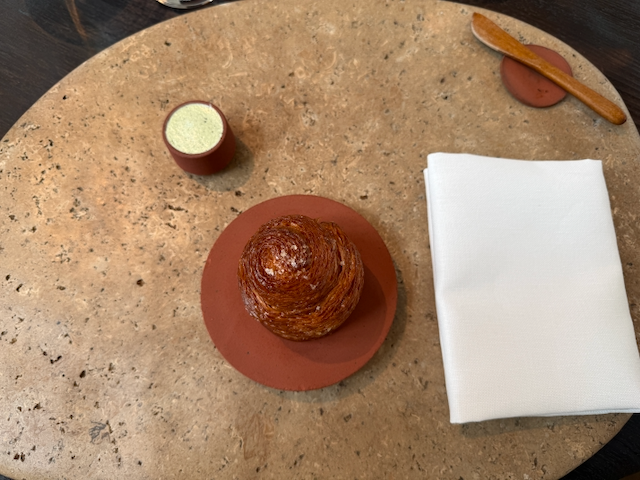
On the Flemish coast, not far from where Hiele grew up, shrimp fishing on horseback still persists — just. Fourteen fishermen practice it. Eight professionally. Brabant Draught horses wade into the surf pulling carts, gathering the small grey shrimp — grijze garnalen — that feed on North Sea plankton and cannot survive freezing, cannot travel far, cannot be replicated anywhere else. Hiele's most beloved dish is a bisque built from their shells: concentrated, enriched with brandy-flecked cream, served with bread he leavens and bakes himself — a skill from his first job, the bakery his father sent him to as punishment, which shaped everything. The bisque is not on the regular menu. It is held back, offered only at private events in Koksijde, in the house that belonged to his grandparents. He calls it a destination dish: one he loves too much to let become ordinary, and one he keeps slightly out of reach as a reminder of where he comes from. The table is supposed to get messy. The napkins are supposed to be used. At this price point, at this level of recognition, the deliberate refusal of formality is its own statement.
The building has six rooms. Guests who stay awake to the polders in the morning, eat breakfast made from what the coast allows, and understand the place differently for having slept inside it. The overnight concept is not hospitality as an upsell. It is a logical extension of Hiele's argument: the restaurant is not a destination you visit and leave. It is a place you submit to, briefly, on its own terms.
This is what separates Keignaert from the long tradition of local-and-seasonal cooking in European fine dining. Most restaurants that claim the land still operate from a fixed menu, written and costed in advance, with "seasonal" meaning the supplier changes, but the dish does not. Hiele has made the menu structurally impossible to write before the morning of service. There is no version of this restaurant that can exist without the daily catch, the proximity of the farmers, and the discipline of not substituting. If the North Sea gives nothing worth cooking, the evening changes.
The surrounding eight hectares — farmed, tended, allowed to bloom — are not decorative. A dill plant in Koksijde signals the first asparagus. The figs grow tangy near the coast. Even acidity has a geography here. Lemons come from a biodynamic farm in Spain — the one concession, noted without apology: the coast cannot supply everything. But the logic holds.
What Hiele has built is a restaurant organised around deference. Not to tradition, exactly, though the family lineage is everywhere. Not to the customer, who arrives without a menu and eats what was caught. And not to the chef, whose authority is real but bounded by what the morning provided. The authority belongs to the place. The coast decides. The polder decides. The Vistrap at seven in the morning decides.
It is an unusual position for a chef with a Michelin star, a World's 50 Best ranking, and a book on the shelf. The contemporary fine dining world tends toward the chef as total author — the restaurant as the expression of a singular intelligence, the menu as a fixed argument you come to hear. Hiele has inverted this. He has made himself the instrument, not the composer.
He does not interpret the North Sea coast. He follows it.
And if that sounds like modesty, consider the discipline required to mean it every day.
Restaurant Willem Hiele. Kapittelstraat 71, Oudenburg, Belgium. Thursday–Saturday dinner; Saturday–Sunday lunch. Six guest rooms from €210, including breakfast. Dine & Dream packages available on request.