Appetite Was Never Innocent
The Shelf — The Ghannouj Gazette
The salt cod on the Mary Rose in 1545 is not a curiosity. It is a supply chain. The fish was caught in Newfoundland, preserved in salt from the Atlantic coast, loaded onto a naval vessel, and consumed by men whose survival was the condition for England's expanding reach. Before there was an empire, there was the caloric requirement to sustain it. Before the ideology of conquest, there was the hunger that made conquest worth organising.
Lizzie Collingham's The Hungry Empire makes an argument that sounds simple but isn't: that the history of British colonialism can be traced through what Britain ate. Not as a metaphor — as a mechanism. The spice trade was not motivated by boredom. The sugar plantations were not built for luxury. The famines of Bengal were not accidents of climate. These were the predictable outcomes of a global food system organised around extraction — around the transfer of caloric and agricultural value from the colonies to the metropole, at a cost that never appeared in the price paid at the English market.
The book is structured as a series of meals. Each chapter opens on a specific table — sometimes historical, sometimes reconstructed — and uses that meal to anchor a wider movement of trade, labour, and imperial administration. A West African slave port. A Bengal rice field. A Victorian drawing room. The method could be charming; Collingham uses it to be precise. The charm is in the access — the meal as an entry point to understanding what abstract words like "trade" and "empire" actually meant at the level of the individual body. The precision is in refusing to let the charm do the work alone.
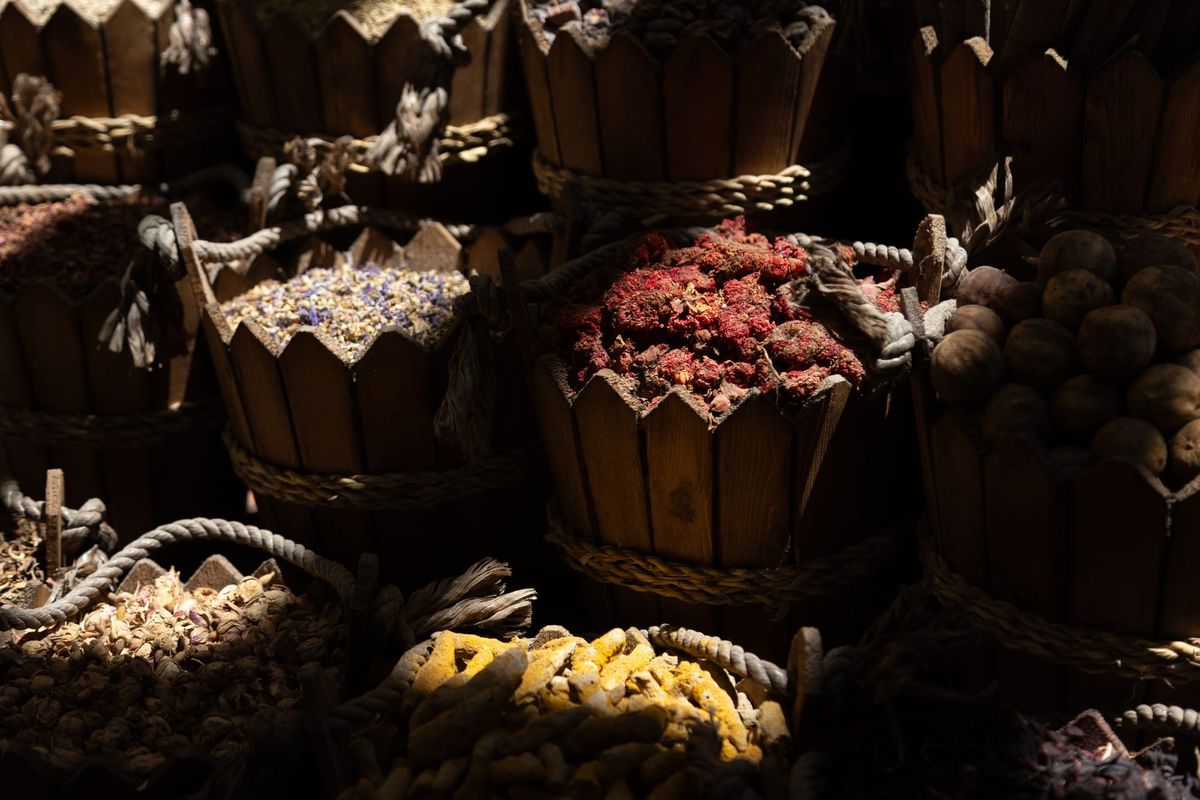
What the book insists on, and what makes it more than a history of gastronomy, is the arithmetic. When sugar arrived in England at the prices it did, someone else was absorbing the cost — in labour, in land, in the structural impoverishment of the territories whose agricultural capacity was reorganised to feed British tastes. The Christmas pudding contains, within its ingredients, the full geography of extraction: sugar from the Caribbean, dried fruit from the eastern Mediterranean, and? spices from South Asia. It is not a product of the empire. It is a map of it.
The book does not preach this. It plates it. Collingham hands you the dish and then, very quietly, asks who grew the ingredients. Who picked them?? Who profited from the distance between the field and the table? Who went hungry while the English debated the proper way to serve plum pudding? The questions are in the structure of the book, not in any polemical argument. This is its strength.
What you are eating, the book ultimately proposes, is a history. Not a metaphorical one. A real one — traceable, documented, still organising the food systems of the world we currently occupy. The kitchens of the imperial nations are still stocked largely by the agricultural labour of the same territories that were reorganised to supply them. The geography of appetite has not changed as much as we prefer to believe.
The hunger was never innocent. It was always imperial.
Book: The Hungry Empire by Lizzie Collingham