The Machine, the Leather, the Skin
Computational designer and tattoo artist Assaad Awwad on the body as archive, the materials he hasn't yet mastered, and why his most personal piece will never be seen.
to be confined to
A conversation with Assaad Awwad
Assaad Awwad's first design was not an object. It was the way he stood in a room.
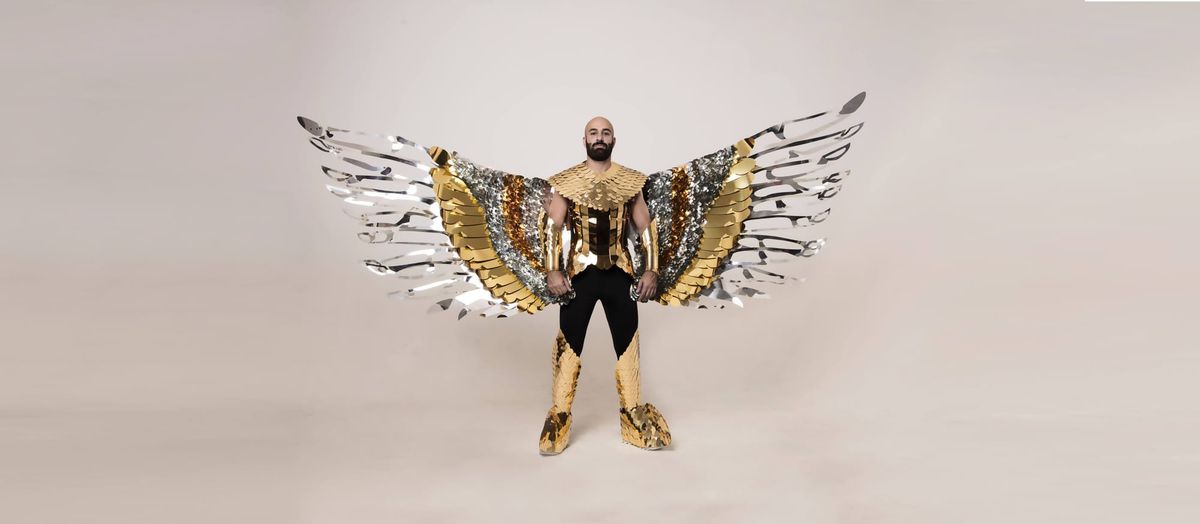
He tells me this without irony, which is how you know it's true. The computational designer, tattoo artist, and fabricator of wearable architectures for clients he names only as global icons has spent years building a practice that refuses to be confined to a single category. He works under the name Ink Monk. He designs structural sculpture. He makes things to be worn, touched, and eventually forgotten into the body. The studio is located somewhere quiet. The person inside it is quieter still.
Your work crosses skin, sculpture, structure. What is the actual through line?
The body. Even in rigid forms, I'm thinking about weight, touch, intimacy, and memory. Everything I make is meant to exist close to someone — to be carried, worn, or felt.
Before you begin something new, what happens?
Silence. I step away from input. I need to recalibrate — to feel scale, breath, intention — before anything starts. The work tells me when it's ready to begin.
What object in your studio holds the most meaning?
The paintings that surround me — especially the works of Juan Palomares. They don't simply occupy the space. They shape it. They remind me why I make, not just how.
You've described your aesthetic as geometric, even algorithmic. Where does emotion enter?
In the decisions — what stays, what disappears. What feels heavy or light. Geometry is structure. Emotion is what bends it. You don't feel the mathematics. You feel the choices.
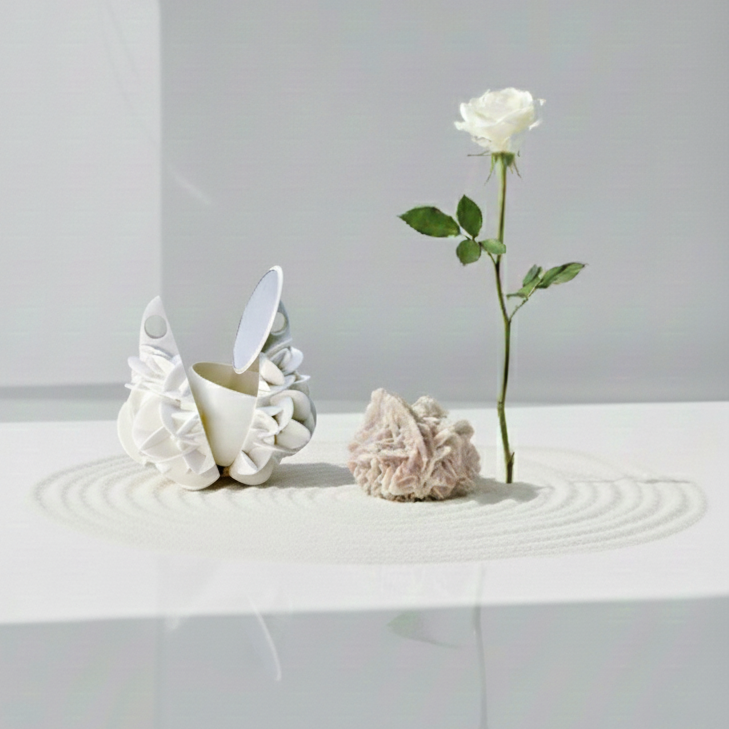
The most personal piece you've made?
Something no one will ever see. It wasn't made for audience or expectation. It held a moment I needed to process. That was enough.
Your work with the body suggests you believe it holds memory.
Absolutely. The body is an archive. Some memories bypass language entirely. They live only in sensation. What we carry in the skin is as real as what we carry in the mind — and often older.
A material you've always understood — and one you haven't yet?
Leather and wood. They're not alive, but not dead either. You soak them, mould them, and they become something living again. Gold produced by my own hands — that's still ahead. I usually work alongside my friend and master jeweller Álvaro Larrosa Furest, whose hands know gold better than mine do. Forging it myself is a future conversation.
A recent discovery in your practice?
Repetition. The same gesture, done again and again, doesn't dull your senses. It sharpens them. I think I already knew this, but I needed to relearn it.
Your signature scent?
Woody. Dry. Intimate. Incense, skin, blood, rubber. I'm never without Thé Noir 29.
A book you return to?
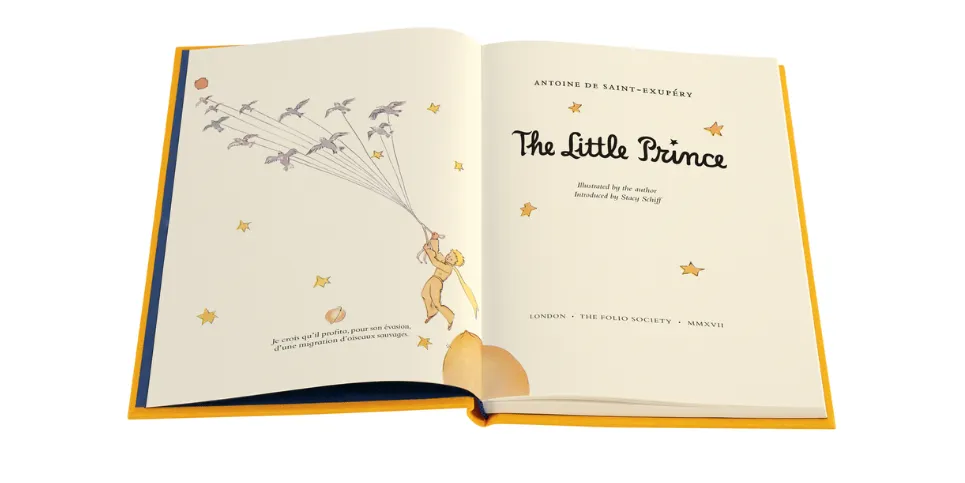
The Little Prince by Saint-Exupéry. At ten, you understand it one way. Later, it becomes something else entirely. It grows with you, shaped by experience. That's the only kind of book worth gifting.
A dish that feels like home?
Kousa, wara' arish, and laban. It is home. It is my mother. God bless her soul in heaven.
If your current mood had a soundtrack, what would it be?
The sound of a chimney. Fire cracking softly. And if it had a scent — cinnamon apple, with a pinch of clove.
There are people who explain what they make, and people who let it sit. Assaad Awwad does not explain. He describes what he pays attention to — silence, weight, the way leather behaves when it's soaked — and trusts that attention to do the editorial work for him. His most revealing answer was about how he first learned to take up space. Everything that came after was a variation on the same idea, arriving in different materials.