Simplicity Is Not Simple
A profile of Gert De Mangeleer and Hertog Jan at Botanic Sanctuary — on discipline, Belgian fine dining, and the hidden labour behind apparent simplicity.
Gert De Mangeleer has spent twenty years removing things. What remains is the hardest part.
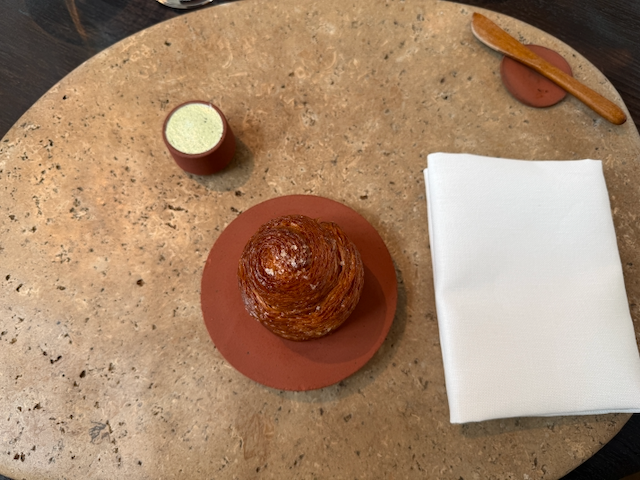
There are six chefs in the kitchen at lunch. In a restaurant of this price, this few. One man stands closer to the pass than the others, a bandana worn low across his forehead, hands moving with the economy of someone whose body no longer requires instruction from the mind. The room holds twenty-four people. The ceiling is eighteenth-century stone. Beyond the tall windows, the hotel's conservatory is already there — beehives, a working herb garden, a greenhouse — not built for this kitchen but inherited by it, and used with the same logic that governed the farm in Zedelgem: the ingredient begins outside, before it becomes a decision. Nobody is speaking at a volume that carries.
This is Hertog Jan at Botanic Sanctuary, and the silence is not ambient. It has been designed.
Gert De Mangeleer opened a brasserie in Bruges in 2005 with his business partner, sommelier Joachim Boudens, and spent, in translation,next two decades conducting what amounts to a sustained experiment in subtraction. Not the studied minimalism of chefs who strip a plate to signal restraint — a gesture that is, in its own way, theatrical — but something more structural and less flattering to the ego: the kind of reduction that makes the kitchen invisible by demanding more of it.
His working motto is a sentence that, in translation, sounds ,like a management aphorism: simplicity is not simple. In practice it describes a method. A dish might take two months to develop. "By fast, I mean two months," he said once, with the dry precision of a man who has learned not to expect sympathy for this. Some dishes take longer than a year. It describes a method. A dish might take two months to develop. The process involves iteration and failure and the quiet stubbornness of someone who has decided that the correct version of a thing exists and that working backward from a plate that almost works is not finishing.
The garden came first in philosophy, if not in chronology. By 2010, De Mangeleer had reached the point at which the market could no longer supply what the kitchen required — not just in terms of quality but in terms of specificity. He and Boudens borrowed €4.2 million, purchased a farmhouse outside Zedelgem with its own working land, and began growing. The significance of this was not agricultural. It was creative. Once the garden existed, the kitchen's first question shifted from what do we want to cook to what can we grow, and the answer to that second question produced things that no other kitchen could replicate, because no other kitchen had cultivated them.
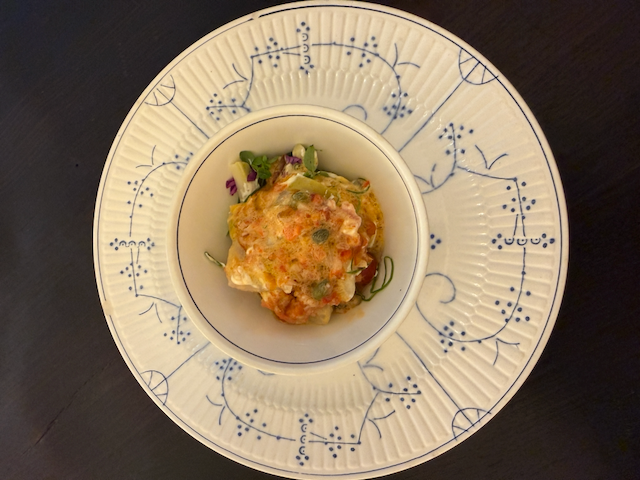
The clearest demonstration of this is a dish that sounds, in description, modest: a plate of tomatoes. In the Zedelgem years, Hertog Jan grew 102 varieties of cherry tomato. The dish named a collection of them, served to the whole dining room simultaneously. Every guest received the same course. No two plates were identical. Come back the following evening and the same dish arrived with entirely different flavours. Other chefs heard about it and produced approximations using three or four varieties. De Mangeleer's response to this, when asked, was to note the number again, calmly. One hundred and two. The point was not the tomatoes. The point was that the dish required infrastructure so specific to this kitchen, this soil, this decision made six years earlier, that replication was not a meaningful category.
The simple plate, in other words, is the product of an extraordinarily complex system — most of which the diner never sees and was never meant to. The labour disappears into the result. What remains on the table looks inevitable, and that quality of inevitability — the sense that the dish could not have been otherwise — is precisely what all the months of iteration were purchased to produce. Restraint, here, is not an aesthetic position. It is the visible surface of an invisible architecture.
The move to Antwerp in 2021 introduced a complication. The Botanic Sanctuary, a former cloister converted into a five-star hotel, provided a setting of genuine architectural distinction — the eighteenth-century main hall, the conservatory already growing beyond the windows, the herb garden feeding into a kitchen that had not yet arrived. De Mangeleer recognised in the building the same structural logic he had applied to Zedelgem: a space where the outside and the inside were in conversation, where the ingredient had proximity to the plate. He did not bring the farm. He found something that rhymed with it.
The city itself adjusted the vocabulary. Antwerp is not Bruges. It is a port city, historically cosmopolitan as harbour towns always are, and De Mangeleer registered this difference immediately and practically. In Zedelgem, he had never used spices. "Here, it feels normal," he said. "They used to come through the harbour." The geography adjusted the vocabulary without altering the grammar. The underlying commitment to ingredient primacy, to reduction over addition, to the disappearance of technique behind its result — these held.
What also held, and perhaps intensified, was the format. Twenty-four covers. Two weeks per month. One menu, presented without a printed card, without alternatives, without the consumer's usual power of selection. The Japanese term omakase translates, approximately, as I leave it to you — but the phrase underestimates what is actually being surrendered. This is not a tasting menu with a fixed list. It is the transfer of every decision — sequence, pace, proportion, the moment the chef chooses to appear beside a particular table and finish a particular dish in front of the people who will eat it — to a single other person's judgment. The welcome drink arrives before the first course: an infusion drawn from the monastery garden, served in the entrance hall. It is not hospitality. It is an instruction. The meal begins with the herbs because the herbs establish what kind of attention is about to be required.
Belgian gastronomy has always operated at a slight angle to the dominant European narrative, which positions Paris at the centre and distributes prestige outward from there. Belgium has produced, across the past thirty years, a density of serious cooking that this narrative consistently undervalues: the classical Flemish rigour of Peter Goossens at Hof van Cleve, the uncompromising localism of Kobe Desramaults, who closed his restaurant In de Wulf at its peak rather than watch it soften, and the Franco-Asian precision of Sang-Hoon Degeimbre at L'Air du Temps, whose Korean heritage quietly altered what Belgian produce was asked to do. What De Mangeleer's work adds to this map is a particular kind of intellectual position — not technique-first, not concept-first, but material-first, beginning always with the question of what this specific piece of land, at this specific moment in the season, makes possible, and then pursuing that question with a rigour that has no natural stopping point.
He received a third Michelin star at the age of thirty-three, which made him the youngest in Belgian history to hold three. He walked away from all of it in December 2018, on the night when the restaurant was still full and still excellent and the argument could still be made that the best years were ahead. The last guest left at 1:34 in the morning. He has described what followed with the disarming flatness of someone recounting a practical problem: he woke at six, he didn't know what to do, and then he went skiing. The man who had spent twenty hours a day in the kitchen for thirteen years found that the morning after was not an emotional event but a logistical one. There was, it turned out, still a great deal of work to do.
That is perhaps the most honest thing about De Mangeleer: not the precision of the plates, not the philosophy of the garden, not even the decision to stop, but the fact that none of it, at any stage, was simple. The plates looked that way. That was the entire point.