To Cook Is to Refuse to Forget
A review of Stanley Tucci's Taste — on food as cultural memory, immigrant kitchens, and what illness reveals about why we eat.
At thirteen, Stanley Tucci rounds a corner and finds his grandmother on the back porch skinning a squirrel. He is horrified. She looks back at him as though he is the one behaving strangely. This is not a comic anecdote. It is the opening position of the entire book.
Taste is framed as a food memoir — the story of a life organised around tables, recipes, and Sunday lunches conducted with the gravity of legal proceedings. What it is actually doing is making an argument about what food transmits that language cannot: the specific posture of care, the inherited understanding of how a thing should be done, the body knowledge that passes from one generation to the next through the act of watching. Tucci's grandmother does not explain why the squirrel must be skinned this way, here, now, without ceremony. The knowledge is self-evident to her. The gap between her certainty and his horror is precisely the distance between a culture that is lived and one that is merely inherited. He has the food. He does not yet have the understanding.
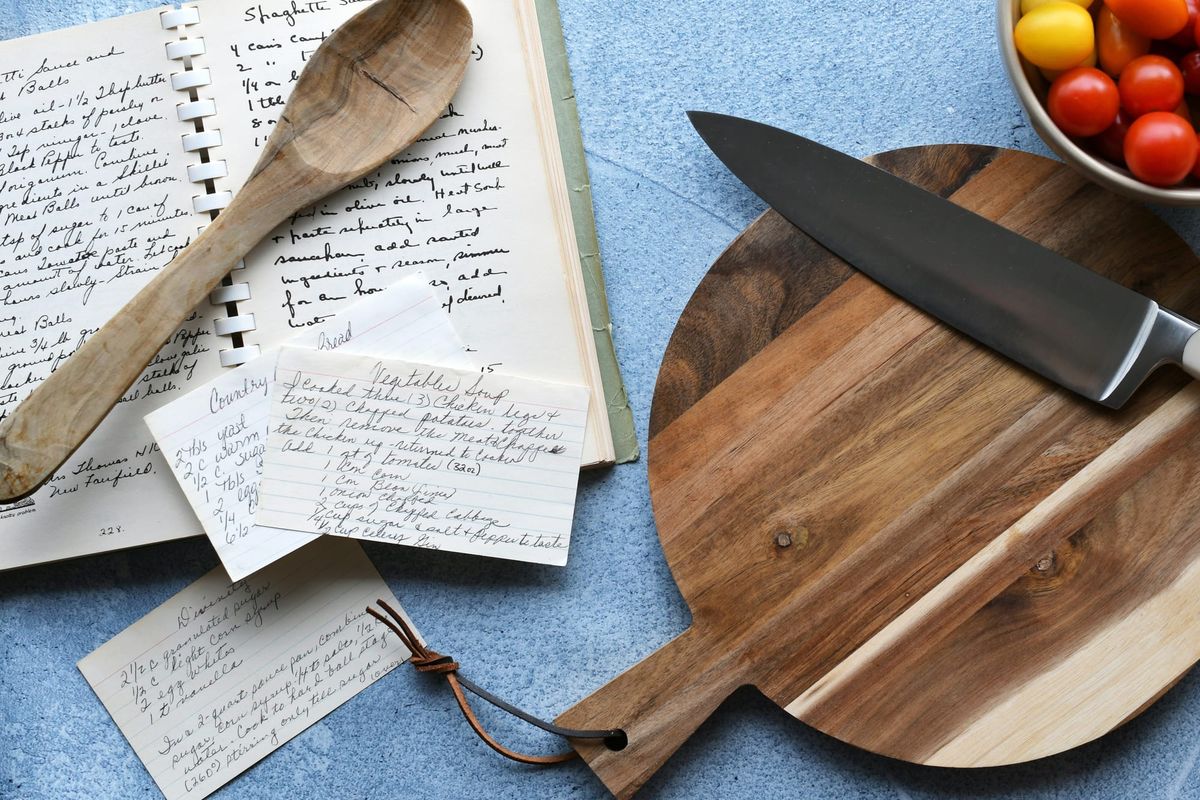
The Italian-American kitchen, as Tucci renders it, is a site of cultural insistence. In a country whose culinary mainstream was hostile to the specificity of immigrant food for most of the 20th century — its smells, its ingredients, its refusal to simplify — cooking with the attention his family gave it was a form of persistence through practice. You cooked this way because your mother did, and her mother before her, and the chain carried something that could not be carried in luggage. The Sunday gravy, the precisely fried courgette, the carbonara prepared without cream: these are not preferences. They are positions.
The memoir's second act — the loss of his first wife, then the diagnosis of oral cancer — does not pivot away from food. It deepens the stakes of everything already said about it. Oral cancer is, among other things, the threatened removal of taste itself. What Tucci faces is the possibility of losing the very sense through which he has organised meaning. The feeding tubes are not merely medical. They are the interruption of a language. What the illness makes visible, through its threat of taking it away, is what eating has always been: not pleasure as luxury, but pleasure as proof of being present. The mouthful that confirms you are still here.
The recovery is not triumphant. It is simply the return to the kitchen — the return to the practice that had always been his mode of attention to the world. Cooking through grief, cooking through convalescence, cooking as the one activity that demanded full presence and returned something immediate in exchange. What Tucci understands and communicates without ever stating it directly is that the table is not where memory is celebrated. It is where memory is made. The meal is not the commemoration of the past. It is what the past looks like when it is still alive.
Taste: My Life Through Food — Stanley Tucci